
Inclusive Employment Australia (formerly DES) or open employment?
By Diego Reyes · Updated 2026-06-30
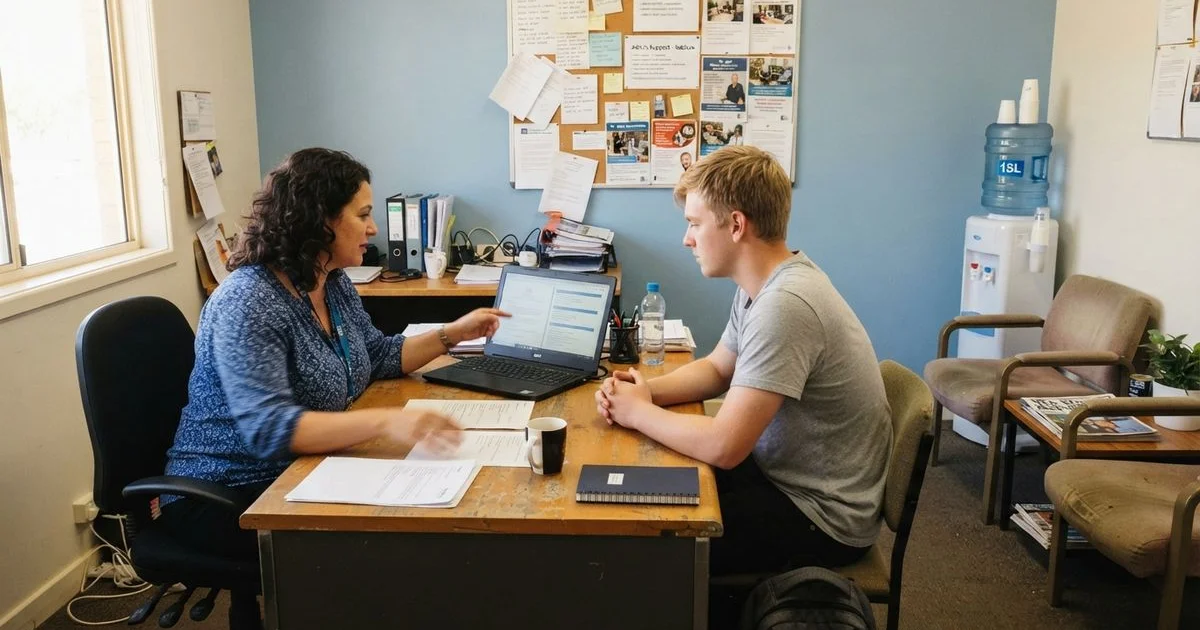
Disability Employment Services (DES) is now called Inclusive Employment Australia. The new program replaced DES on 1 November 2025, and it helps people with disability, injury or a health condition prepare for, find and keep work. You don’t need a Centrelink payment to join, there are no time limits, and you can change provider whenever you like. You can also look for work on your own, or do both.
This is general information, not legal, medical or financial advice, and it doesn’t consider your situation. Perth Disability Connect is an independent directory, not an employment provider or a government service. Program rules change, so check the linked source before you rely on them. Rules are current as at 28 September 2026.
You may have been with a DES provider, or someone has suggested “DES” to you. This guide covers what changed, who can join, how to choose or change a provider, and when looking for work on your own makes more sense.
What happened to Disability Employment Services?
The Department of Social Services (DSS) says “Inclusive Employment Australia replaced the Disability Employment Services program on 1 November 2025” (DSS). The DSS runs the program. People who were with a DES provider were moved across, and DSS says “All Disability Employment Services participants will now be supported by the new program” (DSS news).
The biggest changes for job seekers:
- You don’t need to get a government payment to be in the program.
- You can take part even if you can only work a few hours a week.
- There are no more time limits on how long you can stay with a provider.
- The old DES streams have gone. Support is now split into help before a job and help after you start one.
What is Inclusive Employment Australia?
Inclusive Employment Australia is funded by the Australian Government. DSS says it “assists people with disability, injury or health condition to prepare for, find and maintain work and grow their career” (DSS). You work with a provider, which is an organisation contracted by the government.
Before you have a job, a provider helps you prepare for and find work that suits you. After you start a job, you can get Post Placement Support for up to one year. After that, Ongoing Support continues for as long as you need it if your job is at risk because of your disability (DSS, Participant Information Pack FAQ).
Who is eligible for Inclusive Employment Australia?
According to the DSS participant FAQ, you may be eligible if:
- you have a disability, injury or health condition
- you’re at least 14 and under Age Pension age (67)
- your assessed work capacity is less than 30 hours a week
- you’re an Australian citizen or hold an eligible visa
- you’re not a full-time student. Final-year school students can join once as an Eligible School Leaver.
Your work capacity is usually worked out through an Employment Services Assessment, which “a qualified health or allied health professional” does (JobAccess).
If you already have a job, you can still get help. To get Ongoing Support in your current job, the DSS FAQ says you “must have been in your job for at least 12 Consecutive weeks or expect the job to last at least 12 weeks”.
How to join
There are 2 ways in (DSS, Participant Information Pack FAQ):
- Contact a provider directly. DSS calls this Direct Registration, and you don’t need a Centrelink referral.
- Ask Services Australia to refer you, by calling the Centrelink Employment Services line on 132 850.
Either way, the provider will check whether you’re eligible. You can compare disability employment providers in Perth on what their reviewers say before you choose one.
Choosing and changing your provider
You choose your provider, and it doesn’t have to be close to home. DSS says “You don’t need to have an Inclusive Employment Australia provider that is close to where you live” (DSS, Find a provider).
You can change provider for any reason, and as many times as you like. JobAccess puts it plainly: “you can do this as many times as you like, no questions asked” (JobAccess). To change, use the Workforce Australia website or call the National Customer Service Line on 1800 805 260 (DSS). A few exceptions apply, for example if you have compliance action that hasn’t been resolved.
Mutual obligations: do they apply to you?
Whether mutual obligations apply in Inclusive Employment Australia depends on your payment. If you volunteer for the program, you don’t have mutual obligations (DSS).
If you get a payment that comes with mutual obligations, you’ll need to meet them through your provider. DSS says if you don’t, you may get demerit points and your Centrelink payment may be put on hold. If you get the Disability Support Pension and you’re under 35, you may have participation requirements you can meet through the program (Services Australia).
Money for workplace changes and wages
2 government funds sit alongside Inclusive Employment Australia, and you can use them whether or not you have a provider:
- The Employment Assistance Fund (EAF) can pay for workplace changes and equipment you need because of your disability. You can apply through JobAccess, including as an eligible job seeker. JobAccess says “Please don’t order or buy anything before you apply” (JobAccess, Applying for the EAF).
- An employer who hires you through the program may get a wage subsidy of up to $10,000 for a new job that lasts 26 weeks (JobAccess, Subsidised wages).
JobAccess also gives free advice to people with disability, employers and providers on 1800 464 800.
Inclusive Employment Australia or looking for work on your own?
You don’t have to pick one for good. You can use a provider and apply for jobs yourself at the same time, and you can leave or join the program later.
| Inclusive Employment Australia | Looking for work on your own | |
|---|---|---|
| Who funds it | The Australian Government | You, apart from free services like JobAccess |
| Help finding work | A provider helps with goals, skills and job matching | Job boards, employers and your own networks |
| Support after you start | Post Placement Support, then Ongoing Support | None built in, but you can still apply to the EAF |
| Time limits | None | None |
| Obligations | Mutual obligations if your payment has them | Only those that come with your payment |
| Control | Shared with your provider, and you can change provider | Entirely yours |
Whichever way you go, you have the same rights at work. Employers must make the reasonable adjustments you need to do the job, unless that would cause unjustifiable hardship. The Australian Human Rights Commission says “it is up to the employer to show that they are unjustified” (Australian Human Rights Commission). Telling an employer about your disability is your choice. JobAccess says “If your disability doesn’t affect your work or safety, you don’t have to mention it” (JobAccess).
Inclusive Employment Australia and the NDIS
You can be in Inclusive Employment Australia and on the NDIS at the same time. The DSS FAQ says “The supports must not overlap, but they can work together”. The NDIS can fund supports such as “on-the-job coaching, training and mentoring” (NDIA, Guide to employment).
You don’t need an NDIS plan to join Inclusive Employment Australia. If you’re finishing school, see our page on school leaver employment support.
How to make a complaint
Talk to your provider first. If that doesn’t fix it, you can contact the Complaints Resolution and Referral Service on 1800 880 052 or the National Customer Service Line on 1800 805 260, and then DSS on 1800 634 035 (DSS, Complaints about providers). Using the complaints service “will not affect your services”, according to the DSS FAQ. DSS says the Complaints Resolution and Referral Service will continue to 31 December 2026.
For discrimination at work, you can complain to the Australian Human Rights Commission on 1300 656 419, and the service is free. For free help with a dispute, see our guide to free and low-cost disability advocacy in Perth.
DES has a new name and fewer rules about who can join. What hasn’t changed is that you can pick the provider, change it if it isn’t working, and look for work your own way at the same time.
FAQ
Q: What are Disability Employment Services called now? A: It’s now Inclusive Employment Australia, which took over from DES on 1 November 2025. Former DES participants were moved to the new program.
Q: Do I need a Centrelink payment to join Inclusive Employment Australia? A: No. You don’t need a government payment to take part, and you don’t need a Centrelink referral. You can register directly with a provider.
Q: Is there a time limit on Inclusive Employment Australia? A: No. There are no time limits on how long you can stay with a provider. After you start work, you can get Post Placement Support for up to one year, then Ongoing Support for as long as you need it.
Q: Can I be on the NDIS and in Inclusive Employment Australia? A: Yes. You can use both at the same time, as long as the supports don’t overlap. You don’t need an NDIS plan to join.
Q: How do I switch to a different Inclusive Employment Australia provider? A: Use the Workforce Australia website or call the National Customer Service Line on 1800 805 260. You can change for any reason, as many times as you like, with a few exceptions.
Q: Is Perth Disability Connect an employment provider? A: No. We’re an independent directory. We’re not an Inclusive Employment Australia provider or a government service.
Frequently asked questions
- Do I need an NDIS plan to access Disability Employment Services?
- No. DES is a separate, federally funded program from the NDIS, so you can access it whether or not you have an NDIS plan, as long as you meet the program's eligibility rules.
- Can I use DES and still apply for jobs on my own?
- Yes. Most participants do both. A DES provider adds structured support and employer connections alongside your own applications, rather than replacing them.
- Is DES only for people who've never worked?
- No. It's used just as often by people returning to work after a break, a change in condition, or a job loss, not only first-time job seekers.
- What if a DES provider isn't finding me suitable roles?
- You can raise it directly with them, and you're generally free to transfer to a different DES provider if the match genuinely isn't working.