
NDIS access request denied: what to do next
By Diego Reyes · Updated 2026-07-29
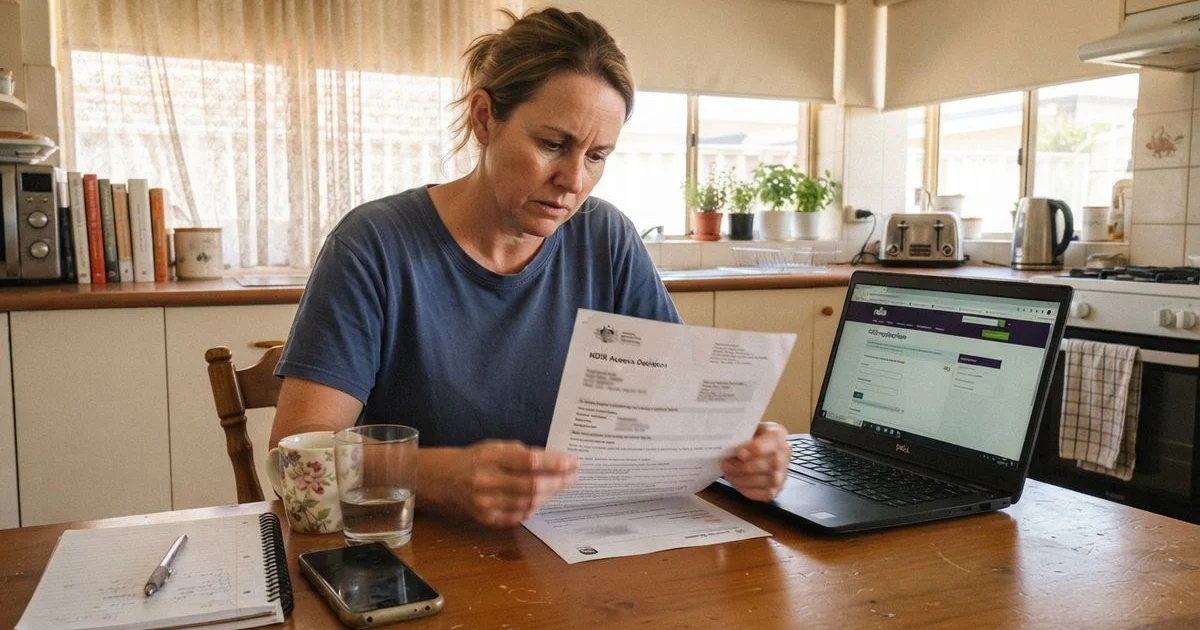
Getting an access request rejected is disheartening, but it isn’t necessarily the end of the road, and it doesn’t automatically mean the underlying condition isn’t serious enough. Often it comes down to how the evidence was presented, not whether the need is real.
This is general information, not legal advice. For a specific situation, particularly a complex one, an advocacy service or a lawyer experienced in disability matters can advise on the best path forward.
Understanding why the decision happened
Access decisions are based on whether the evidence submitted clearly demonstrates a permanent and significant disability that affects daily functioning in specific, described ways. A rejection often reflects a gap in how the evidence was framed, a diagnosis without enough detail on functional impact, for example, rather than a judgement that the condition itself doesn’t qualify. Reading the decision letter carefully for the specific reasons given is the first step, since it tells you exactly what needs strengthening.
Your two main options
You generally have two paths after a rejection: request an internal review of the original decision, or submit a new access request with additional or stronger evidence. A review is usually the faster route if you believe the original decision didn’t properly weigh the evidence you provided. A fresh application makes more sense if the initial evidence genuinely had gaps that need new reports or assessments to fill.
Comparing the two paths
| Internal review | New application | |
|---|---|---|
| Best used when | The original evidence was strong but not weighed correctly | The original evidence had real gaps |
| Timeframe to act | Set window from the decision letter | No fixed deadline, but sooner is better |
| What you need | The same evidence, with a clear argument for reconsideration | New or additional supporting evidence |
Strengthening a resubmission
If gaps in evidence were the issue, focus on getting reports that speak directly to functional impact, what tasks are hard or impossible, how much support is needed, and how permanent the situation is, rather than reports that focus only on a diagnosis or a general description of a condition. It helps to ask treating professionals directly to address these specific points rather than assuming a standard medical letter will cover it.
Getting help with the process
A support coordinator, if you already have one, can help interpret the decision letter and identify what evidence gap likely drove the outcome. Free advocacy services also exist specifically to help people work through access requests and reviews, and they can be a valuable resource if the process feels overwhelming to manage alone, particularly while also dealing with the underlying health or disability situation itself. Our roundup of free and low-cost disability advocacy in Perth lists where to find that kind of help.
Managing the wait
Reviews and new applications both take time, often longer than initially expected, and it’s reasonable to follow up periodically rather than assuming silence means something has gone wrong. Keep a record of every submission, letter and phone call, since a clear paper trail makes any further escalation much easier if it’s needed.
Looking after the person at the centre of it
A rejection can feel deeply personal, particularly for someone who’s already had to describe difficult, private details of their daily life to get to this point. It’s worth acknowledging that directly rather than moving straight into logistics. If a second round of evidence-gathering means revisiting the same difficult conversations with treating professionals, checking in on how that person is coping with the process, not just the outcome, matters just as much as getting the paperwork right.
If a review is also unsuccessful
There are further formal review options beyond an internal review, including external merits review, for people who believe a decision remains wrong after the first review. This is a more involved process, and it’s the point where getting advice from an advocacy service or a specialist adviser tends to be most valuable. For disputes that involve a provider rather than the access decision itself, our guide on your rights as an NDIS participant covers that separate complaints process.
Once access is approved, browsing categories on the homepage is a reasonable way to start understanding the range of providers available while a plan is being built. Our methodology explains how listings across the directory are assessed and ranked.
A knock-back is frustrating, but for many people it’s a solvable evidence problem rather than a final answer, and persistence with the right supporting information often gets there in the end.
Frequently asked questions
- Why do access requests get rejected?
- Most commonly because the evidence provided didn't clearly show a permanent, significant impact on daily functioning, not necessarily because the underlying condition isn't serious.
- How long do I have to ask for a review of an access decision?
- There's a set timeframe from the date of the decision letter to request an internal review, so it's worth acting promptly rather than waiting.
- Do I need a lawyer to appeal an access decision?
- No. Many people manage a review themselves or with help from a free advocacy service, though more complex cases sometimes benefit from specialist advice.
- Can I just reapply instead of appealing?
- Yes, submitting a new access request with stronger evidence is an option, though a review of the original decision is often faster if you believe the initial decision was wrong on the evidence provided.